
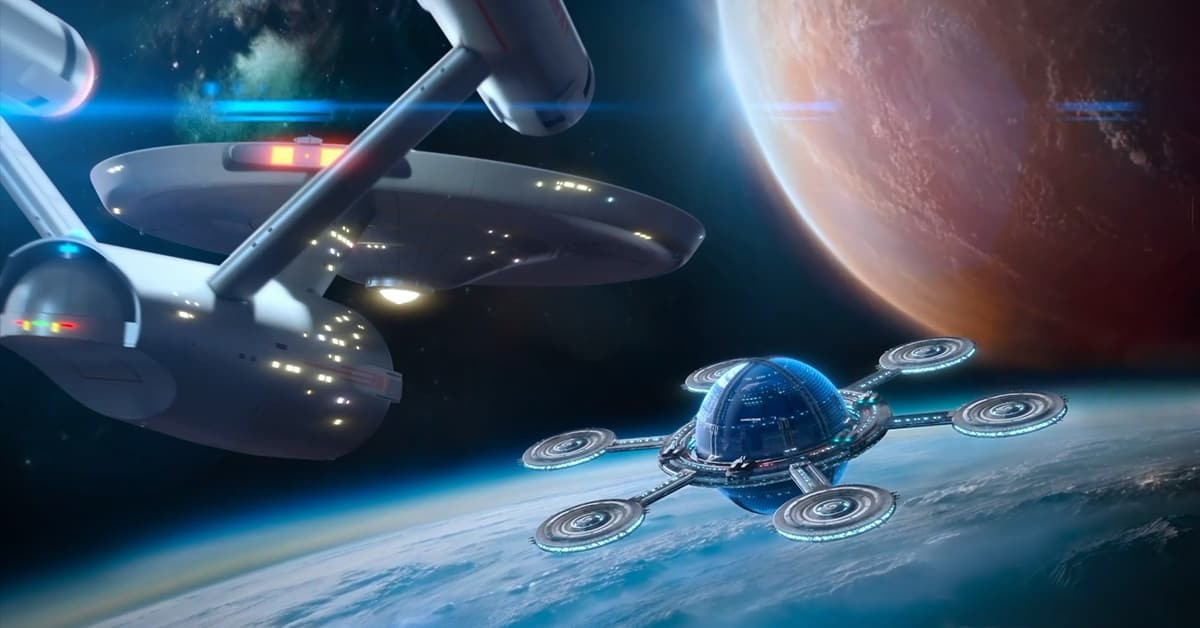
Star Trek Fleet Command is still a serious option in 2026 if you want a long-running strategy MMO built around ships, crews, alliances, and steady account growth. It is a harder sell if you want a short solo campaign or dislike daily routines and paid acceleration.
The alliance play and enormous progression map are the attraction. The accumulated systems, timers, and spending pressure are the trade-off.
Try the opening missions, meet the first crews, and decide whether the daily strategy loop suits you.
Play Star Trek Fleet Command →What do you actually do in STFC?
You develop a starbase, research upgrades, build ships, assign officers, gather resources, and travel through a shared galaxy. Each improvement feeds another: research strengthens ships, crews change combat performance, and higher Operations levels open more systems.
There is nearly always another project waiting. That makes progress satisfying, but it also means STFC is designed to become a routine rather than a game you quickly finish.
Is it too late to start?
No—the game remains actively supported, and Scopely's 2026 roadmap focuses on lasting content, clearer mid-level progression, stronger alliance play, and quality-of-life work.
The catch is obvious: established accounts have years of ships, officers, buildings, research, and currencies behind them. New players should not try to understand or chase everything immediately.
Our first-week guide covers the early decisions that deserve attention.
Alliances make the biggest difference
Alliances affect help timers, group activities, competitive events, shared knowledge, and the social life of a server. A good group can explain confusing systems, prevent poor investments, and turn repetitive tasks into shared objectives.
Why alliances help
- Faster learning
- Group activities
- Practical account advice
- A reason to return
What they may demand
- Scheduled participation
- Event contributions
- Server politics
- Competitive pressure
If joining an active group sounds like part of the fun, begin your first command and use the opening levels to find the right server community.
How complicated is progression?
STFC has grown for years, so its menus contain faction relationships, officer abilities, research trees, ship materials, events, and level restrictions. Recent improvements such as Bulk Research and better filters reduce repetition, but they do not remove the underlying layers.
| System | Why it matters | New-player approach |
|---|---|---|
| Station | Controls account development | Follow mission requirements |
| Research | Permanent efficiency and power | Prioritize useful paths |
| Ships | Unlock activities and targets | Do not build everything |
| Officers | Crew abilities change outcomes | Learn synergy before rarity |
| Events | Feed resources and progression | Skip goals beyond your account |
The game rewards restraint. Chasing every visible upgrade is the fastest way to scatter resources without creating a stronger fleet.
How visible is monetization?
STFC is free to begin and purchases can accelerate or expand progression. Spending is not limited to cosmetics: offers may reduce waiting or supply resources connected to account growth.
Low-risk approach
- Test the normal loop first
- Set a fixed spending limit
- Compare value over time
- Ignore fear-of-missing-out pressure
Warning signs
- Paying to escape every timer
- Buying before understanding systems
- Chasing every event milestone
- Spending to match veteran accounts
If station upgrades, crew planning, events, and alliance play already feel like work without acceleration, a purchase will not fix the underlying mismatch.
Platforms and PC requirements
STFC supports Windows, macOS, iOS, and Android. A Scopely Account can carry progress between supported platforms, making PC useful for longer sessions without abandoning a mobile account.
| Platform | Official baseline | What to know |
|---|---|---|
| Windows | Windows 10 64-bit, Intel i3-4130, 8 GB RAM | Newer Windows builds are recommended |
| macOS | Big Sur, dual-core Intel Core i5, 4 GB RAM | Confirm current client compatibility |
| iOS / Android | Device dependent | Useful for shorter check-ins |
Our PC and Mac setup guide explains account linking and desktop preparation.
Who should play—and who should skip it?
Play it if you want
- Long-term fleet progression
- Ships and officers from several eras
- Active alliance play
- Planning around resources and events
Skip it if you want
- A focused solo story
- A clear ending
- No daily routine
- Progression without paid shortcuts
Verdict
Star Trek Fleet Command works best as an ongoing strategy hobby. Its huge progression map, recognizable roster, and central alliance system provide plenty to pursue, while continued 2026 support makes a new account reasonable.
The recommendation remains conditional. Monetization reaches into progression, technical problems have required continued attention, and the accumulated systems can feel busy before they feel strategic.
For a patient 4X player, the opening game is worth testing. Take command and form your own verdict before deciding how much time—or money—the account deserves.
Start with the early missions, join a helpful alliance, and build at your own pace.
Play Star Trek Fleet Command →